Selecting the right wire harness assembly company can have a direct impact on your product’s performance, reliability, and time to market. Whether you’re in aerospace, medical devices, industrial automation, or data infrastructure, your wire harness assembly partner plays a critical role in ensuring consistent quality and long-term success.
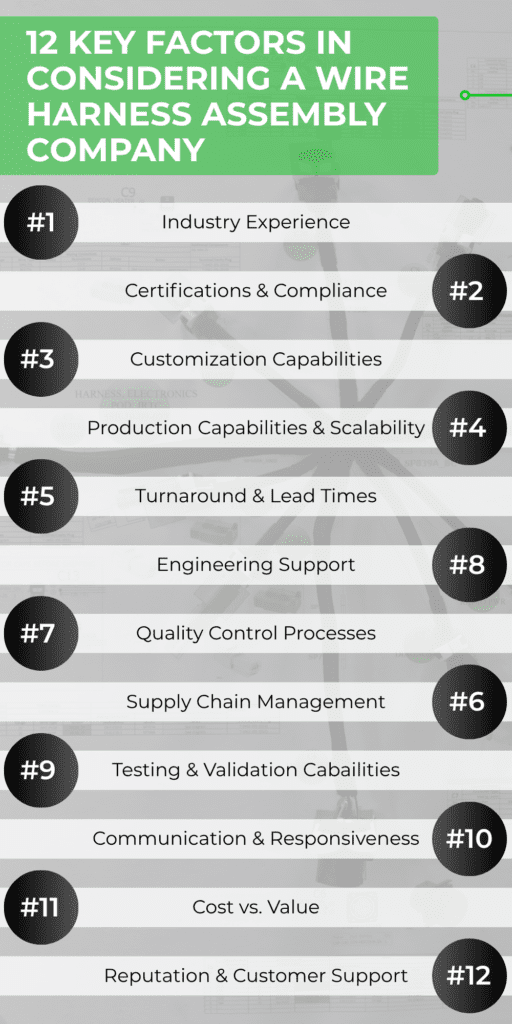
Different providers offer varying capabilities, certifications, and level of support. Below are 12 key considerations to help you choose the right partner.
- Industry Experience
Let’s start with the first key aspect by looking for a wire harness assembly company with proven experience in your specific industry. Requirements for aerospace and medical applications differ
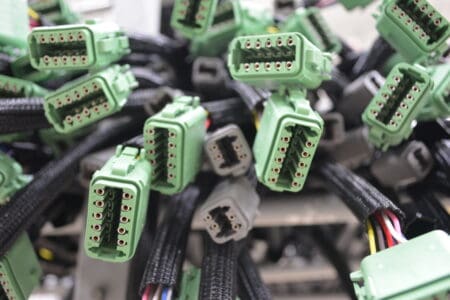
significantly from industrial or commercial projects. A partner familiar with your sector will better understand compliance requirements, documentation, performance expectations, etc.
Tip: ask your partner for case studies in your industry to understand the types of assemblies they can complete.
- Certifications & Compliance
Certifications signal a commitment to quality and process control. Common certifications to look for include:
- AS9100 (aerospace)
- IATF 16949 (automotive)
- IPC/WHMA-A-620 (wire harness assembly standards)
- ISO 13485 (medical)
- ISO 9001(basic standard)
When a supplier submits its certification records, look for the year next to each certification (i.e. ISO 9001:2016) to ensure that it is meeting the latest and most up-to-date standards. It is also a good idea to visit the supplier in-person to validate quality standards and see its team at work.
Taking these steps ensures your wire harness assembly meets strict industry standards, regulatory requirements, and ultimately, success in a partnership that you desire.
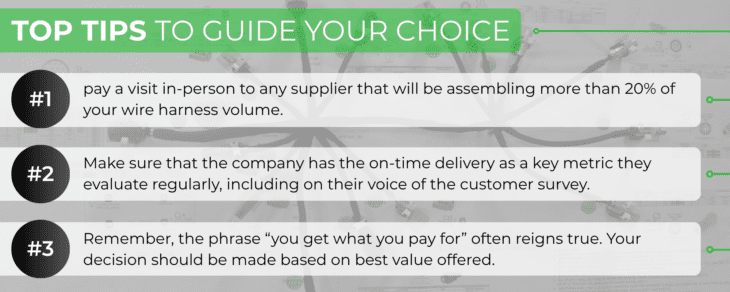
Tip: pay a visit in-person to any supplier that will be assembling more than 20% of your wire harness volume.
- Customization Capabilities
Your application likely requires more than an off-the-shelf solution. A strong wire harness assembly manufacturer should be able to:
- Build to your exact specifications
- Support complex configurations
- Adapt to design changes
- Have solid manufacturing processes to ensure a quality product
Customization is especially important when your application is in the low-to-medium volume, high-mix projects. Look for a supplier that is agile enough to make changes in a fast-paced environment while remaining competitively priced.
Tip: provide as much guidance to your supplier about your assembly needs as possible (i.e. drawings, regulations, assembly applications, etc.)
- Engineering Support
The best partners don’t just build; they collaborate. Look for a provider that offers:
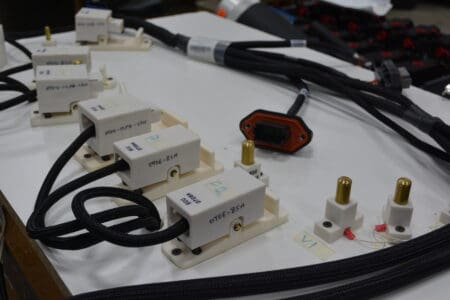
- Design for Manufacturability (DFM) feedback
- Material selection guidance
- Prototyping support
- Obsolescence management strategies
This can reduce costs, improve performance, and prevent issues before production begins.
Tip: ask about your wire harness assembly company’s obsolescence strategies before entering a long-term partnership to ensure it’ll support your needs.
- Quality Control Processes
Of course, the certifications discussed above should provide good insight into quality control expectations. However, it is important to also ensure the following are integrated in your assembly partner’s processes:
- Inspection procedures
- Testing capabilities (continuity, hi-pot, etc.)
- Traceability and serialization
A company with strong quality control minimizes defects and ensures consistency across builds.
The notion of having a perfect wire harness assembly company does not exist, so therefore, your supplier must have in place processes and procedures to allow the handling of defects. Look for companies that have a solid process for:
- Root cause analysis
- Failure effect mode analysis (FMEA or PFMEA)
- CAPA or 5Y
- Gauge Repeatability & Reproducibility (Gauge R&R)
- 8D processes in extreme cases
Tip: Interview the quality control team and assess its deep knowledge in key quality control metrics.
- Production Capabilities & Scalability
Your needs today may not match your needs tomorrow. Choose a wire harness assembly company that can:
- Handle low-to-medium volume production
- Scale as demand increases
- Maintain lead times during growth
One good indication of the company’s ability to scale with you is its automation processes. A company’s ability to automate its wire harness assembly processes ensures quality remains repeatable and reproducible in higher volume orders that come after a prototype.
Tip: ask about your supplier’s automation machinery and how often it is used.
- Turnaround & Lead Times

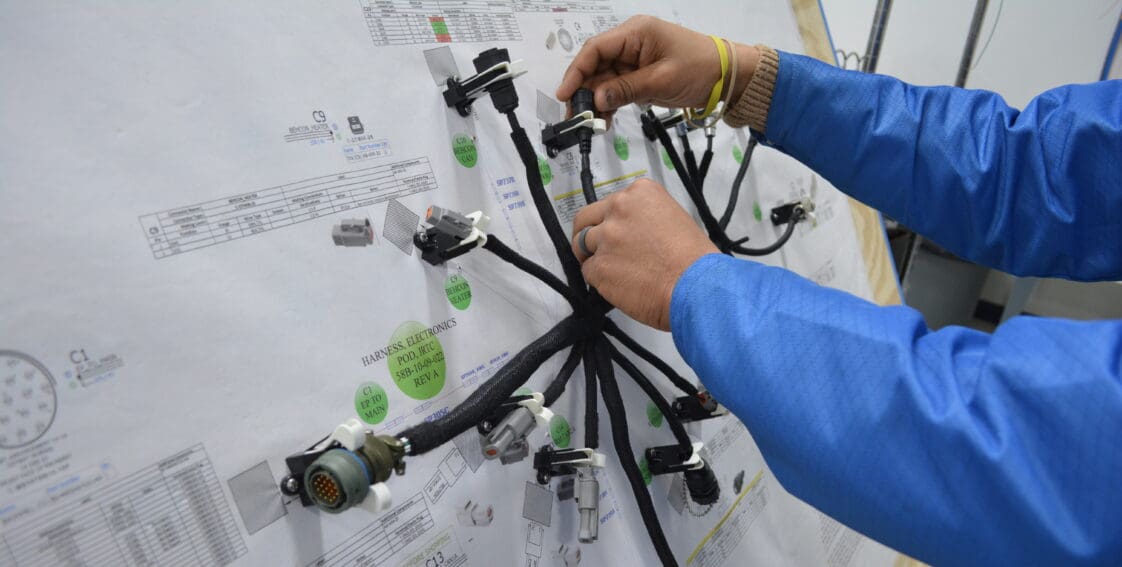
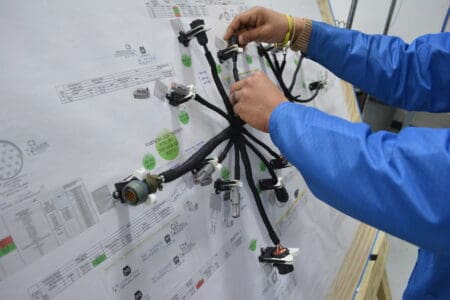
Wire harness assembly in the process of being built by PGF Tech
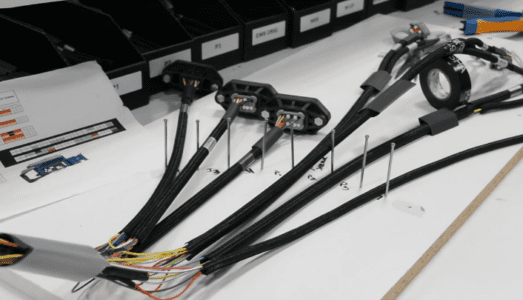
The need to shorten lead times is an on-going issue in manufacturing. Long lead times can stem from the inability to find proper tooling, components, and more. Partners with years of experience in this space will help you find a solution. Evaluate a supplier’s:
- Typical lead times
- Ability to handle expedited orders
- Supply chain efficiency
Delays in wire harness assembly can impact your entire production schedule, so look for companies that have:
- Good relationships with suppliers
- Tooling that stems over years
- Process efficiency that stems from training
- Certified employees
Tip: Make sure that the company has the on-time delivery as a key metric it evaluates regularly, including on its voice of the customer survey.
- Supply Chain Management
The key to any manufacturing company is a strong relationship with its suppliers. Wire harness assembly companies that have a healthy supply chain ensure:
- Component availability
- Reduced risk of delays
- Consistent material quality
- Competitive pricing
- On-time delivery
Effective supply chain management is an essential piece in maintaining production timelines and preventing long lead times. Your wire harness assembly company’s relationship with its suppliers should be based on trust, fairness, and most importantly, a long-term partnership.
Tip: ask what strategies your wire harness assembly company uses to vet and maintain relationships with its suppliers.
- Testing & Validation Capabilities
When it comes to testing as the final step before an assembly leaves the door, it is imperative that all customer specifications and requirements are met. To understand the testing process, one must realize the many milestones of in-process inspection that every assembly undergoes. The manufacturing control plan is designed to make sure that each wire harness is constructed to customer specifications throughout each step of the assembly process. Therefore, final testing acts as a last certificate combining all of the in-process inspections that gets stamped on every assembly, validating the compliance of all customer requirements.
Testing procedures throughout in-process inspection of different milestones in the control plan should include:
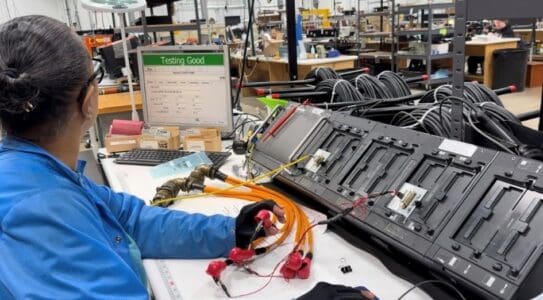
- Connectivity testing
- Manual inspection
- Electronic testing
- Hi-pot testing
- Resistance testing
- And many others
Tip: check a sample of a control plan document and put emphasis on in-process inspection that truly indicates the final assembly results.
- Communication & Responsiveness
Communication is often overlooked, and it is critical to a long-standing partnership. Communication with your wire harness assembly company should always follow the three Cs: clear, complete, and concise. Suppliers who communicate with this in mind will provide you with the tools necessary to complete projects on-time and at the highest quality while identifying and solving problems quickly.
Examples of clear, complete, and concise communication include:
- Providing regular updates
- Responding quickly to questions
- Proactivity about potential issues
- Providing solutions to unforeseen problems
- Always leading with transparency
Suppliers with strong communication skills often also have strong internal processes, so it is important to pay attention to how a wire harness assembly company’s team communicates early-on.
Tip: when vetting multiple wire harness assembly companies, assess each team’s communication style throughout the quoting process to get a good understanding of how they communicate once engaged as a partner.
- Cost vs. Value
After discussing many other elements, we come down to the most important: cost vs. value. The value of any project is the cumulative of any cost that goes into that assembly. Therefore, one must look at all of these values outlined below as vital elements to the combined value delivered by that supplier. As a simple equation for value can be:
Design for manufacturability support
+ Competitive pricing
+ Consistent on-time delivery
+ Highest quality assemblies
+ Reduced rework and failures
+ Inventory management systems
+ Organizational strength
+ Component obsolescence strategies
+ Customization ability
= The Best Value.
When receiving a quote, consider the overall value included when working with a particular wire harness assembly partner. A higher-quality wire harness assembly will save money over time by avoiding costly issues.
Tip: remember, the phrase “you get what you pay for” often reigns true, even for wire harness assembly companies. Your decision should be made based on best value offered.
- Reputation & Customer Support
Finally, look at the company’s track record. Reviews, testimonials, and case studies can provide insight into:
- Customer satisfaction
- Long-term partnerships
- Problem-solving capabilities
A reputable wire harness assembly company will stand behind its work and support you throughout the lifecycle of your product.
Tip: ask what your supplier does to receive customer feedback. If it has customer satisfaction strategies in place, this is a good sign that the team cares about your partnership beyond a single assembly.
Final Thoughts
Choosing the right wire harness assembly company is about more than just finding a supplier; it’s about building a partnership that supports your product’s success from design to delivery.
By evaluating these 12 considerations, you can confidently select a partner that delivers high-quality, reliable wire harness assembly solutions tailored to your industry and application.
Looking for a wire harness assembly company that prioritizes quality, customization, and reliability? Contact PGF Technology Group today to discuss your project and see how our team can support your next build: Contact Us | PGF Technology Group