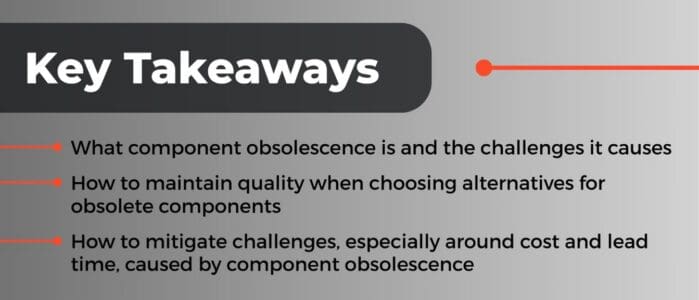
“This component is being discontinued.”
If the product you’re manufacturing includes electronics like complex PCBAs, that dreaded notice can trigger a wave of questions. Do we have enough inventory? Will we need to redesign? What does this mean for our production?
Component obsolescence isn’t just an inconvenience. In manufacturing industries like aerospace, automation, defense, medical devices, and transportation, component obsolescence can disrupt timelines, certifications, and long-term product viability.
While component obsolescence is an inevitable hurdle in manufacturing, it can be managed. Below is your complete guide to component obsolescence and how to account for it.
But first, what actually is component obsolescence?
What Is Component Obsolescence?
Component obsolescence occurs when a manufacturer discontinues a part used in an electronic assembly. Below is a small sample of the components that can create obsolescence issues:
- Connectors
- Integrated circuits
 Microchips
- Relays
- Sensors
- Specialized cable components
- Passive components like resistors or capacitors
- And more
 Microchips
It’s often driven by factors including but not limited to:
- Advancing technology
- Changes in the component’s demand
- Company acquisitions
- Supply chain consolidation
- Regulatory changes
- Raw material shortages
Component lifecycles can vary based on industry. For example, in fast-changing industries, like technology and computer manufacturing, component lifecycles are much shorter. In industries like aerospace, automation, defense, medical device, and transportation manufacturing, component lifecycles can range anywhere from 5-30+ years.
Now that we understand what component obsolescence is, let’s discuss the challenges it can cause engineering and purchasing teams.
What Challenges Arise from Component Obsolescence?
When a part goes obsolete, it can impact your entire manufacturing process. Some challenges across production can include:
1. Backward Compatibility Issues
A “replacement” component isn’t always a drop-in substitute.
Some examples can be:
- Pinout and color code schemes may differ
- Form and fit factors may change
- Electrical characteristics may vary
- Firmware or software integration may require updates
In PCBAs especially, even minor spec differences can require redesign, revalidation, and retesting. This has a huge impact on cost of products, which can change market share due to higher prices for assemblers. In regulated industries, that may also mean recertification, which adds time and, again, cost.
2. Sourcing Challenges
When obsolescence is announced, many buyers rush to secure the last components they can. This can lead to:
- Inflated cost when purchased through brokers
- Purchase limits due to limited inventory
- Longer lead times for the components due to increased orders.
If your assemblies rely on specialized connectors, high-reliability components, or defense-grade electronics, sourcing becomes even more challenging, which ultimately passes cost and longer lead times to the end-product.
In many cases, manufacturers may not even be aware of obsolescence. This makes mitigating the challenges above even harder because they are unplanned and unaccounted for.
3. Increased Engineering Burden
Redesigning around a new component isn’t just a purchasing issue; it’s an engineering project. That can involve:

- Schematic updates
- Layout revisions
- Prototyping and testing
- Documentation updates
- Customer approvals
- Government recertifications (including FDA, UL, etc.)
Imagine finding the time for all of this on top of existing responsibilities.
How Can You Prevent and Combat Component Obsolescence Challenges?
While we can’t eliminate obsolescence entirely, we can certainly strategize to minimize its risk. Here are a few key elements to add to your component obsolescence management strategy:
1. Audit Your Suppliers Regularly
Don’t wait for the discontinuation notice. Instead, you can identify critical components and set up time to review their lifecycles regularly with suppliers. Proactive monitoring helps you identify vulnerabilities before they become emergencies and alerts your critical suppliers to know when these critical components are being phased out.
2. Work with Partners Who Communicate Early
A task-based assembler will build exactly what’s on the print. A true manufacturing partner actively monitors component lifecycles and communicates potential risks.
That includes:
- Recommending alternative components early
- Advising on lifecycle management strategies
- Helping plan last-time buys strategically
Working with the right contact manufacturer can make all the difference in planning for obsolescence.
3. Design with Lifecycle in Mind
When designing electronic assemblies, it is important to keep product lifecycles in mind. Try to design with approved alternatives in mind for older components and build flexibility into your designs up front.
For cable and wire harness assemblies, that may mean qualifying multiple connector manufacturers. For PCBAs, it may mean selecting components with longer lifecycle forecasts.
4. Maintain Strategic Inventory
In certain applications, longer product lifecycles may justify:
- Strategic safety stock
- Consigned inventory agreements
- Long-term procurement planning
This requires coordination between engineering, purchasing, and your manufacturing partner.
The Right Partner Makes All the Difference
Component obsolescence impacts your product’s design, manufacturing process, and lead time. Working with the right electronic manufacturing partner can help ease the burden of component obsolescence on both engineering and purchasing teams. Choosing the best electronic assembly partner means collaborating with a team that:
- Understands your application and industry requirements
- Monitors component lifecycles
- Communicates proactively
- Helps you evaluate alternatives
- Thinks beyond the immediate build
If you are looking for an electronic manufacturing solutions provider and a true partner in your production process, look no further than to PGF Technology Group. Contact us at sales@pgftech.com to learn more.